

The Greatest Impacts Aren't Visible
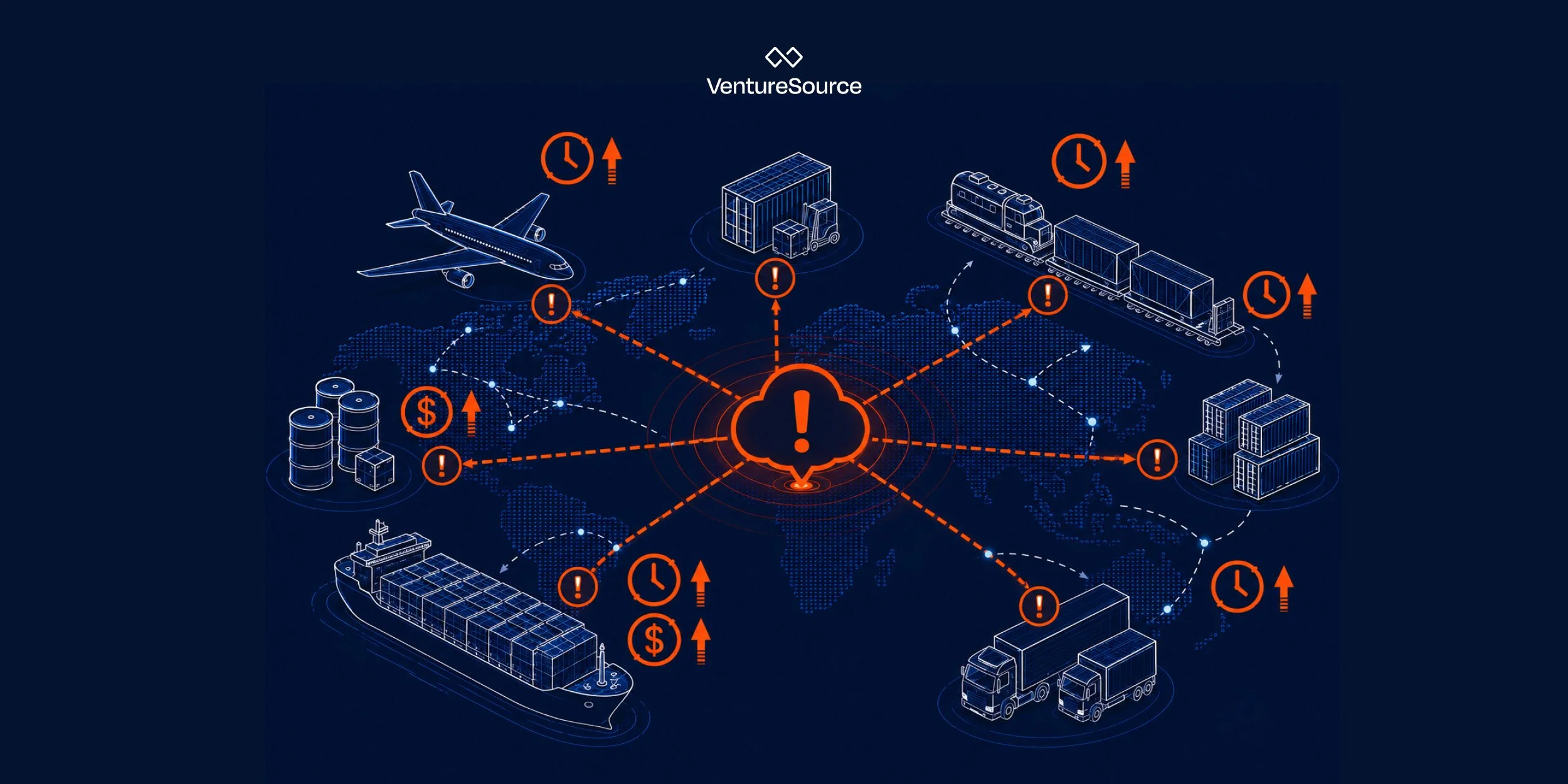
Most people understand the direct impact of geopolitical events: longer routes mean longer transit times.
The indirect impact is often much bigger.
When vessels take longer routes, ships and containers stay in transit longer. That means equipment isn't available where it's needed next. Over time, capacity tightens, schedules become less flexible, and companies far from the original disruption can begin experiencing delays.
It's a reminder that global logistics operates as one connected network.
A disruption in one region doesn't always stay there.
That's why successful supply chains aren't built around reacting to delays. They're built around understanding how the market is changing—and planning for it before problems reach your dock.
For more insight into geopolitical impacts on global logistics, click here.