

Global Disruptions Don't Stay Local
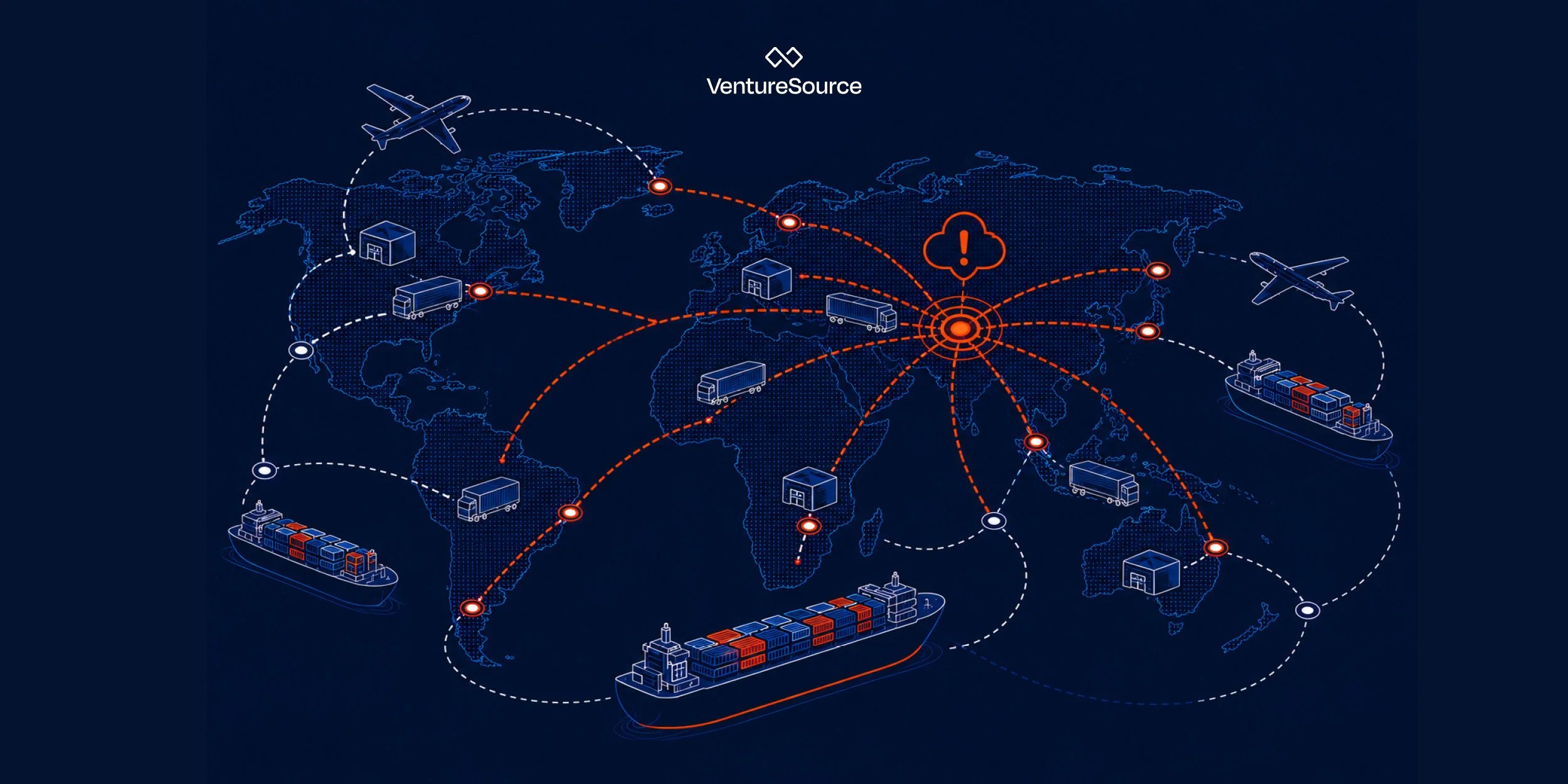
When geopolitical tensions make the headlines, it's easy to assume the impact is limited to that part of the world.
In reality, global supply chains don't work that way.
A disruption in one trade lane can affect vessel schedules, container availability, and transit times thousands of miles away. Even companies shipping from Europe or Asia can feel the effects of events happening somewhere else.
That's because global logistics is one interconnected network.
Why It Happens
When shipping routes are disrupted, carriers adjust.
Some vessels take longer routes to avoid higher-risk areas. Others change schedules or delay departures until conditions improve. Those decisions help keep cargo moving, but they also keep ships and containers tied up longer.
As equipment spends more time in transit, it's no longer available where it's needed next. Capacity tightens, schedules become less flexible, and delays begin to spread beyond the original disruption.
It's a ripple effect—and it's one of the reasons a problem in one region can create challenges around the world.
A Good Example
We're seeing that happen today.
Geopolitical tensions in the Middle East are causing some vessels to avoid traditional routes through the Red Sea and Suez Canal, taking the longer route around the Cape of Good Hope instead. While that clearly affects shipments moving through those trade lanes, the impact doesn't stop there.
Longer voyages tie up ships and containers for additional time, reducing available capacity across the global shipping network. In some cases, containers aren't returned where they're needed, creating equipment shortages in entirely different regions.
The result is that companies far removed from the original disruption may still experience longer lead times or more limited shipping options.
What Importers Can Do
No company can control geopolitical events.
What they can control is how they prepare for them.
When market conditions become less predictable, it helps to:
Build additional flexibility into lead times.
Book shipments as early as possible.
Stay informed as market conditions change.
Work closely with a logistics partner who can identify developing issues before they become costly delays.
The goal isn't to predict every disruption. It's to build enough flexibility into your supply chain that one disruption doesn't become your disruption.
The Bottom Line
Global supply chains don't operate in isolation.
When one part of the network slows down, the effects often extend much farther than the headlines suggest. Companies that understand those ripple effects are better prepared to adapt, make informed decisions, and keep freight moving—even when the market is changing.
Learn how VentureSource helps importers improve visibility, respond faster, and keep freight moving: VentureSource Lead Logistics